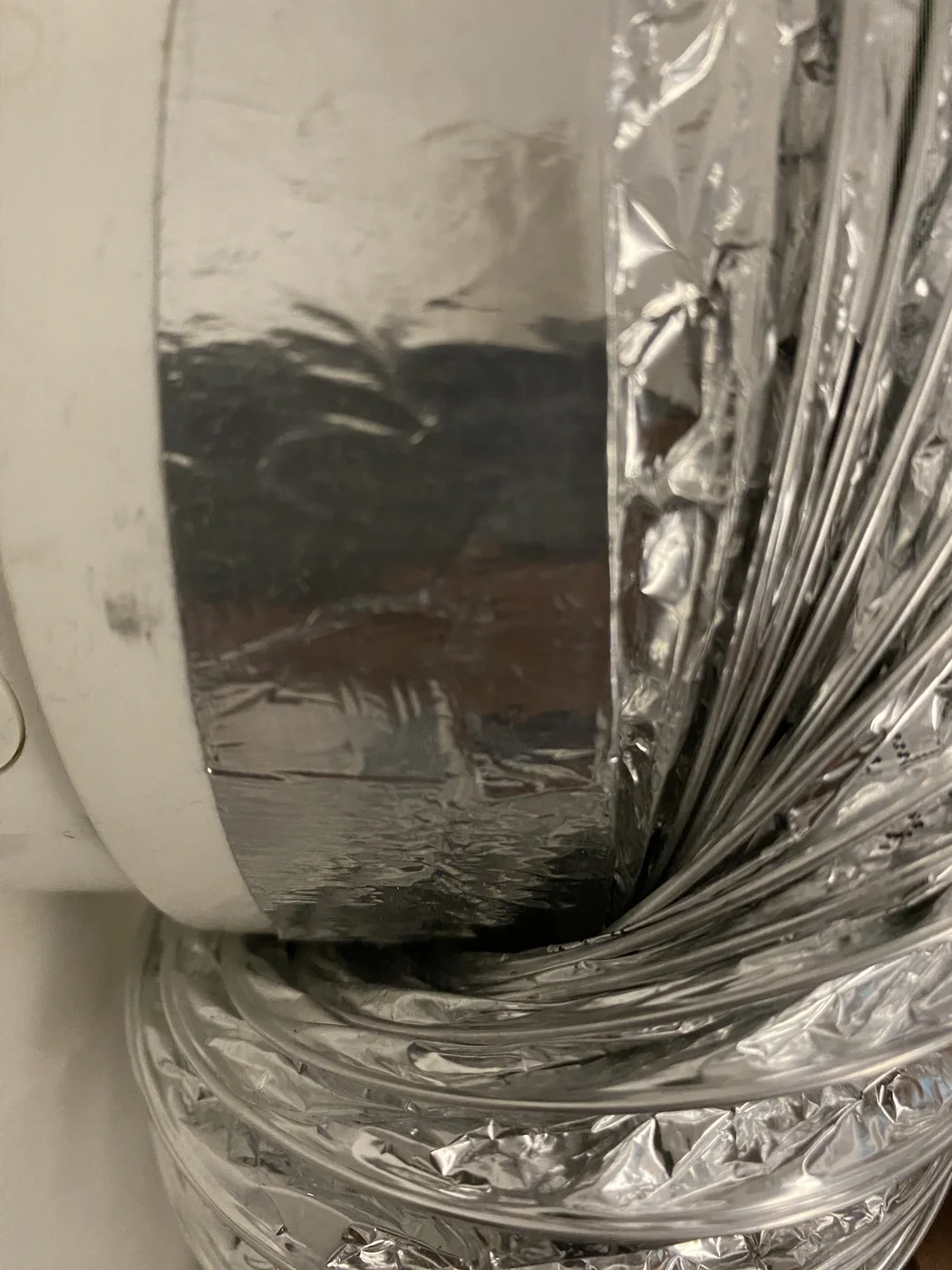
A dryer exhaust system is more than the short hose visible behind the appliance. It begins inside the dryer, continues through a transition connector and a concealed duct, and ends at an exterior termination on a wall or roof. Each component has a different job, and a problem at any point can affect the way the full system moves air. Understanding the parts helps distinguish cleaning from a needed repair. It also prevents a common mistake: assuming that a clean lint screen means the entire exhaust path is clear.
The airflow path starts inside the dryer
During a vented drying cycle, a blower moves heated air through the drum and sends moisture-laden exhaust toward the appliance outlet. The lint filter sits within that internal airflow path and captures a substantial share of the fibers released by clothing. It is the first maintenance point, which is why the U.S. Fire Administration and appliance manufacturers advise cleaning it before or after each load. Even a well-maintained filter does not capture every fine fiber. Some material can pass into the dryer cabinet, the connector, and the downstream exhaust duct over time. A clean filter is therefore important, but it is not a complete assessment of the vent system. If a dryer suddenly performs differently, start with the filter, then consider the rest of the path rather than treating the screen as the only possible restriction.
The transition duct connects the appliance to the building duct
The transition duct is the short, removable connector between the dryer outlet and the wall or floor connection. It must be flexible enough to allow installation and service access, yet arranged so the appliance does not flatten or sharply kink it when pushed into position. Dryer manufacturers commonly specify approved metal transition materials and model-specific installation details. Extra length, tight loops, or a connector trapped behind the dryer can reduce the open cross-section available for exhaust. Because this piece is visible once the dryer is carefully moved, it is often the first place to inspect for a mechanical problem. A transition duct can be clean and still be restrictive if it is crushed. Conversely, replacing the connector will not remove lint farther inside a concealed run. The condition of both sections matters.
The main exhaust duct may travel through walls, ceilings, or an attic
Beyond the transition connection, the main exhaust duct carries air through the building envelope. Its route may be short and direct, or it may include several elbows and a vertical rise before reaching the outdoors. Each home or building is different, so a long or vertical route should not automatically be described as defective. It does, however, create more surface area and more fittings to evaluate when performance changes. Elbows alter the direction of airflow and are common places to check during a service. Concealed sections can also become disconnected or deformed, conditions that cleaning alone cannot correct. A useful assessment identifies the likely route, the accessible connection points, and the termination location before selecting tools or making conclusions about the cause of a restriction.
The exterior termination has moving parts too
At the end of the system, an exterior hood or roof termination releases exhaust outdoors. Many terminations include a backdraft damper or hinged flap that opens while the dryer operates and closes when it stops. The U.S. Fire Administration recommends checking that the outdoor covering opens during operation. A flap that is stuck, obstructed, painted shut, or burdened with lint can limit the final outlet even when the duct upstream is relatively clean. Screens, mesh, cages, and bird guards are not the same as a damper; fine openings can collect lint and need careful evaluation. A roof outlet is not automatically a problem simply because it is on the roof. Its condition, accessibility, manufacturer guidance, and ability to discharge air freely are more useful considerations than location alone.
One symptom can have several possible causes
Long dry times, a vent warning, or weak movement at the exterior outlet may be associated with lint buildup, but those signs are not a diagnosis by themselves. A dirty lint filter, crushed transition duct, obstructed termination, long run with several turns, or an appliance problem can produce overlapping symptoms. A practical evaluation works through the system in order: confirm the filter is clean, inspect the connector, observe the exterior damper if it is safely accessible, and compare airflow under consistent operating conditions. If cleaning produces a clear improvement but airflow remains limited, the remaining issue may involve configuration, damage, or the appliance. That is why a credible service report should separate what was observed, what was cleaned, what changed, and what still needs attention.
Need the full dryer exhaust path evaluated?
Zarts can inspect accessible connections, clean the dryer exhaust route, check airflow under consistent conditions, and explain any visible connector or termination concerns. Request a quote with details about your dryer location and whether the outlet is on a wall or roof.
Sources and further reading
These primary sources support the general consumer and system information in this guide. They do not endorse Zarts or replace evaluation of a specific home.