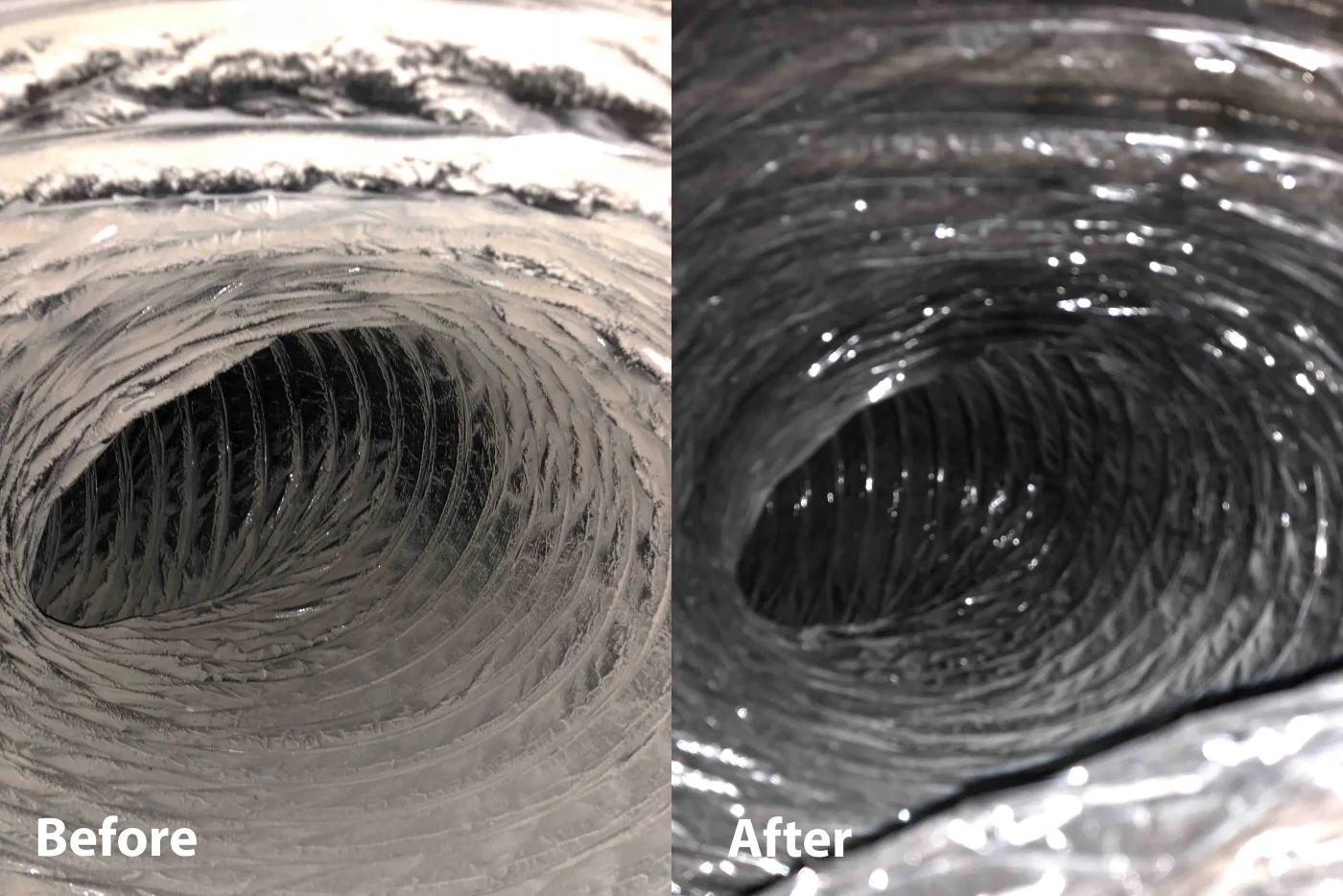
Start by identifying the duct material
The visible register does not reveal the construction of the entire air-distribution system. A metal boot may connect to a flexible branch, which may feed from a sheet-metal or fiberglass plenum. Other systems use sheet-metal trunks with internal fiberglass lining. Access panels, attic observations, installation records, and careful inspection can help identify the materials before cleaning begins.
Material identification matters because the inside surface must be protected. A technique suitable for bare metal may be too aggressive for a flexible inner liner or a fiberglass surface. Age and condition matter as well: even the correct tool can damage a section that is already brittle, torn, delaminated, or poorly supported.
Flexible duct requires controlled handling
Flexible duct typically has a thin inner liner supported by a wire helix, surrounded by insulation and an outer vapor jacket. It is useful for routing branches through attics and other constrained spaces, but sharp bends, compression, poor support, and crushed sections can reduce the effective passage for airflow. Those layout problems are repair issues, not deposits that cleaning can remove.
Inspection should look for tears, disconnected collars, severe sagging, collapsed sections, and signs that the liner may not tolerate cleaning. When cleaning is appropriate, agitation should be controlled and matched to the material. Forcing an unsuitable brush or tool through a damaged branch can create a larger problem than the original buildup.
Bare sheet metal offers different access options
Round or rectangular sheet-metal ducts have a comparatively durable, nonporous interior. Their fittings may include elbows, takeoffs, dampers, seams, and access panels. Settled debris can collect along horizontal surfaces and around transitions, while loose connections can admit attic, garage, or wall-cavity air. Cleaning removes included deposits; it does not seal those leaks.
Metal construction may allow a broader range of contact or compressed-air tools, but the system still requires care. Sharp edges, dampers, turning vanes, insulation, sealant, and concealed equipment can limit access. Any access opening created for service should be closed and sealed appropriately after the work is completed.
Fiberglass surfaces need a gentler decision process
Fiberglass duct board and internally lined metal ducts have porous, textured surfaces. The EPA advises that fiberglass duct board and fiberglass-lined metal be handled with methods appropriate to the material. Soft, controlled tools may be necessary, and visibly deteriorated or wet material should not simply receive more aggressive agitation.
Moisture changes the decision. Cleaning is not a substitute for correcting a leak, condensate problem, missing insulation, or another source of wetting. When fiberglass material is wet, visibly damaged, or otherwise unsuitable for cleaning, evaluation and replacement may be more appropriate. Zarts does not present duct cleaning as mold remediation or as a repair for moisture intrusion.
Condition can matter more than material alone
Two ducts made from the same material may call for different recommendations. One may be intact and accessible with removable buildup; another may be crushed behind a finished ceiling or deteriorated near an old connection. The amount and type of debris, the accessibility of the section, and the risk of damage all affect whether cleaning is reasonable.
A useful inspection separates removable deposits from physical defects. Cleaning can address dust and debris within the agreed, accessible scope. It cannot straighten a collapsed flex run, reconnect a separated joint, replace wet insulation, correct poor system design, or restore a deteriorated liner. Those findings should be explained rather than hidden inside a generic cleaning proposal.
Questions to ask before authorizing work
Ask the provider to identify the duct materials, explain how the selected tools protect each surface, and describe where the vacuum collection point will be located. The scope should state whether registers, grilles, boots, branches, trunks, and plenums are included. It should also document known limitations and any section that needs repair or specialized evaluation.
After cleaning, visual documentation should be compared with the same component or section whenever practical. A clear record is more useful than a broad promise about the entire system. It shows what was accessed, what condition was found, and whether any repair, air-sealing, insulation, or equipment concern remains outside the cleaning scope.
Need help evaluating your system?
Call or text Zarts with your property details and the condition you are seeing. We will explain the likely scope and any access information needed for a clear quote.
Sources and further reading
These primary sources support the general consumer and system information in this guide. They do not endorse Zarts or replace evaluation of a specific home.