Before the visit: build an accurate scope
Useful quote information includes the approximate square footage, number of HVAC systems, supply register and return grille counts, property type, recent construction, pets, visible debris, and access constraints. Photos of the air handler, filter location, representative registers, and return grilles can help clarify the layout, but they do not replace an on-site condition check.
The proposal should identify the included components and any known exclusions. A homeowner should know whether the scope covers removable registers and grilles, accessible supply and return ducts, plenums, and any limited equipment-surface work. Duct repair, mold remediation, extensive coil service, and air sealing are different scopes and should not be implied by the phrase “whole-house cleaning.”
Arrival, walkthrough, and equipment setup
Upon arrival, the technician should confirm the number of systems, identify supply and return paths, locate access points, and note fragile finishes or restricted work areas. The condition found on site may change the recommended approach if the duct material, access, or visible buildup differs from the information used for the quote.
Setup requires a clear equipment route and access to the agreed work areas. Furniture or belongings near registers may need to be moved. In condos or managed buildings, elevator reservations, parking rules, service-hour limits, and equipment movement may also need to be resolved before setup begins. Confirm any additional building requirements and who will arrange them before the appointment.
Establishing a negative-pressure collection path
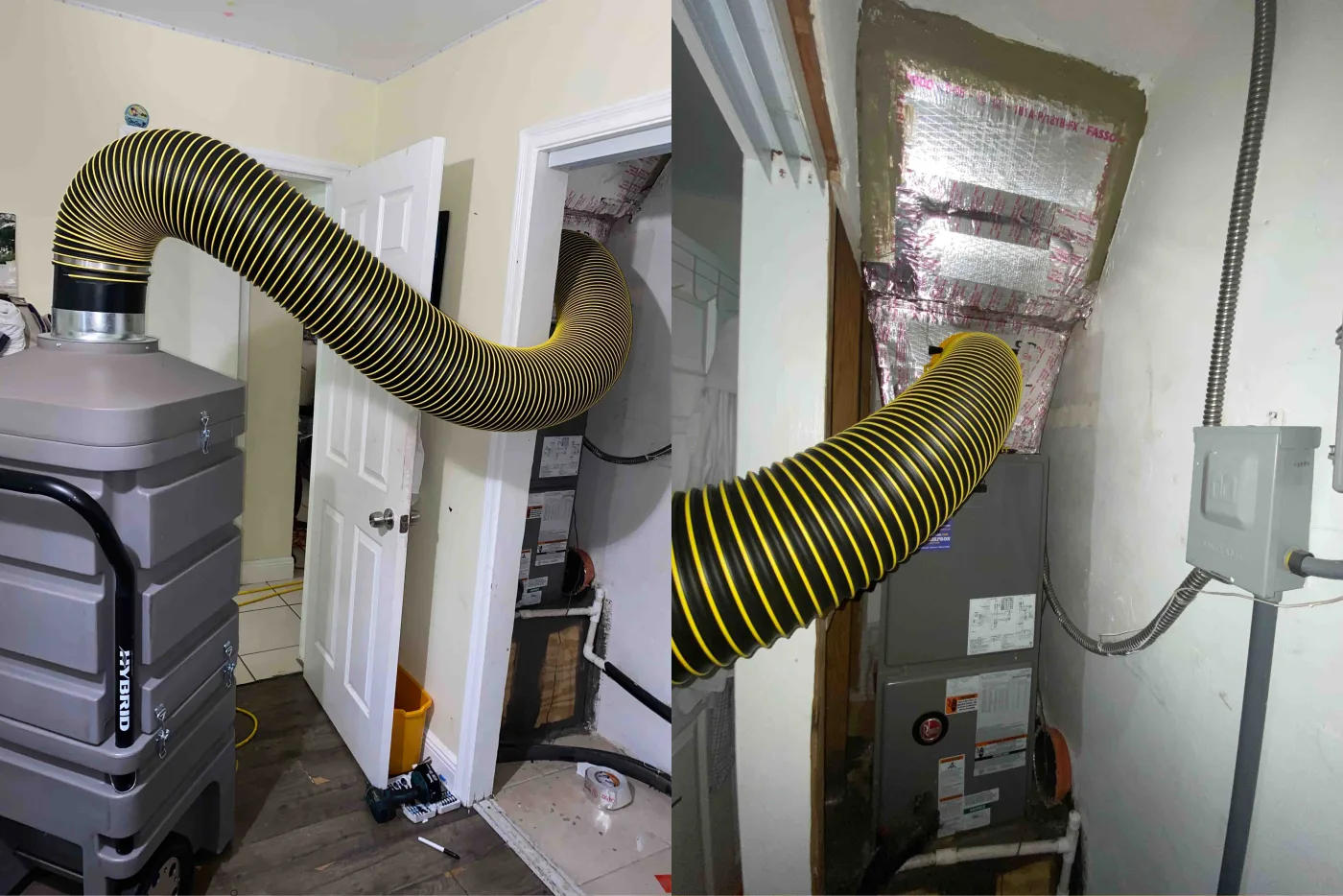
Negative-pressure equipment creates a collection path for material loosened from included duct sections. The connection location depends on the layout and access. If vacuum exhaust remains indoors, high-efficiency filtration is important; the EPA specifically advises the use of HEPA vacuuming equipment when collected air is exhausted inside the home.
Zarts uses portable negative-pressure equipment with staged filtration and a final HEPA stage. The vacuum is not a substitute for agitation, and agitation is not a substitute for collection. The two functions work together: compressed-air tools loosen accessible deposits while the vacuum system captures displaced dust and debris.
Cleaning registers, grilles, and accessible ducts
Accessible supply registers and return grilles can be removed and cleaned separately when included. The technician then works through appropriate access points with tools selected for the duct material and condition. Zarts commonly uses controlled compressed-air agitation in the 180–200 PSI equipment range, but pressure at the compressor does not determine the correct tool or technique for every surface.
The sequence may vary by system. Branches, return paths, trunks, boots, and plenums should be addressed according to the agreed scope, with attention to dampers and fragile liners. If a section is damaged, wet, disconnected, crushed, or inaccessible, the technician should explain the limitation instead of forcing a tool through it.
Timing depends on the property and system
There is no responsible universal duration for every air duct cleaning appointment. Time varies with HVAC system count, home size, register and return count, duct configuration, equipment placement, material, access, protection requirements, and the amount of removable buildup. A large home is not always more complex than a smaller condo with difficult access.
Unexpected findings can also affect timing. A concealed filter, inaccessible plenum, fragile duct liner, blocked attic route, or building-management restriction may require a revised plan. Clear communication is more useful than rushing to meet a duration quoted without understanding the actual system.
Final check, documentation, and cleanup
After the included sections are cleaned, removed components and access points should be reinstalled or closed appropriately. The technician should check the work area, reconnect items that were disconnected within the scope, and explain any condition that still needs HVAC repair, duct repair, moisture correction, filter attention, or another specialized service.
Before-and-after photographs can document accessible components, but they should identify what is shown rather than imply that one image represents the entire system. The homeowner should receive a concise walkthrough of completed work, limitations, and practical next steps. No cleaning appointment should end with an unsupported health, energy-savings, or permanent odor guarantee.
Need help evaluating your system?
Call or text Zarts with your property details and the condition you are seeing. We will explain the likely scope and any access information needed for a clear quote.
Sources and further reading
These primary sources support the general consumer and system information in this guide. They do not endorse Zarts or replace evaluation of a specific home.