Describe when and where the odor occurs
Useful diagnosis begins with a timeline. Note whether the odor appears only at startup, continues throughout a cooling cycle, comes from one room, is strongest near a return grille, or remains present when the HVAC system is off. Also note recent painting, flooring, cleaning products, pest activity, water intrusion, renovation work, or long periods of vacancy.
Those observations help separate a system-distributed odor from a room source that is simply being moved by normal airflow. A return opening can draw an odor from a nearby closet, wall cavity, attic connection, or household product and distribute it to several rooms even when the duct interior is not the original source.
Check routine airflow and filtration conditions
A missing, heavily loaded, poorly fitted, or incorrect filter can allow dust to bypass the intended filtration path or can restrict system airflow. The filter location, fit, installation direction, and manufacturer-approved type should be checked. Replacing a filter is routine maintenance; it is not the same service as removing deposits already present inside accessible ducts.
Dust on a return grille is common and can often be cleaned from the cover. If the odor is associated with substantial debris behind the grille or in an accessible return path, further inspection may be reasonable. A light surface film, however, is not enough to conclude that the ducts are causing the odor.
Moisture and condensate deserve separate attention
Cooling equipment removes moisture from indoor air, and that water must drain correctly. A blocked or poorly draining condensate line, standing water in a pan, wet insulation, an air leak that promotes condensation, or water entering from the building can produce odor conditions that duct cleaning alone will not correct.
The EPA emphasizes source control and moisture correction when addressing indoor environmental concerns. If material has become wet or visibly deteriorated, the source of moisture should be found and corrected. Zarts provides duct cleaning, not mold remediation, laboratory identification, leak repair, or a guarantee that cleaning will resolve an odor whose source has not been established.
Equipment and building sources may mimic a duct problem
Odors can originate at coils, drain pans, blower compartments, electrical components, insulation, pest-contaminated areas, or materials stored near a return. Duct leakage can also pull air from an attic, garage, chase, or other unconditioned space. These conditions call for inspection of the relevant component, not an assumption that deposited dust is responsible.
A cleaning company should stay within its service boundaries. Equipment malfunction belongs with a qualified HVAC service provider; duct damage or leakage may require repair and sealing; water intrusion requires source correction; and a suspected microbial condition should be evaluated by an appropriately qualified professional. Cleaning should not be presented as a substitute for those services.
When duct cleaning may be part of the solution
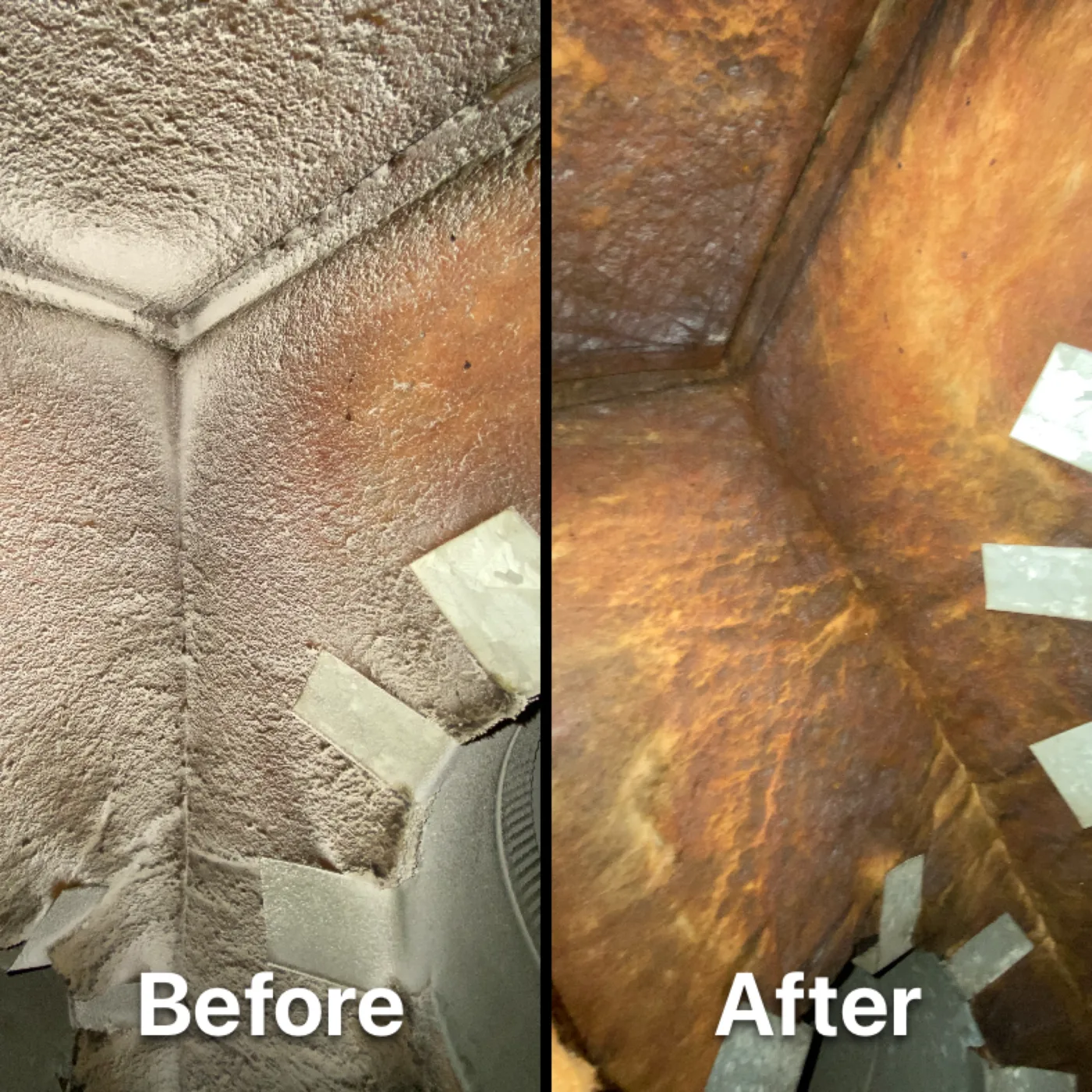
Cleaning may be relevant when inspection identifies substantial removable debris, renovation residue, pest debris after the underlying issue is corrected, or another accessible deposit associated with the odor. The scope should identify the affected components and use controlled agitation with an effective collection method rather than merely treating the visible cover.
The recommendation should remain conditional. Removing a documented deposit can address that deposit, but it cannot promise a permanent result if moisture, leakage, equipment, or room sources remain. A post-service walkthrough should explain what was removed and what, if anything, still needs investigation.
Treat unusual fuel or burning odors differently
A persistent burning, electrical, fuel, or combustion odor should not be treated as a routine duct-cleaning question. Stop operating the affected equipment when it is safe to do so and contact the appropriate qualified HVAC professional, utility, appliance service provider, or emergency service for the situation. Do not rely on fragrance, deodorizer, or duct cleaning to mask a potentially urgent source.
For nonurgent stale or musty odors, document the pattern and request a condition-based evaluation. The most credible outcome may be a cleaning recommendation, a maintenance or repair referral, or a finding that the accessible ducts do not contain buildup that justifies service.
Need help evaluating your system?
Call or text Zarts with your property details and the condition you are seeing. We will explain the likely scope and any access information needed for a clear quote.
Sources and further reading
These primary sources support the general consumer and system information in this guide. They do not endorse Zarts or replace evaluation of a specific home.