What an HVAC filter actually does
A central HVAC filter is positioned so circulating air passes through it before reaching downstream equipment. Depending on the filter and system, it can capture a portion of the particles carried in that airflow. It does not reach into ducts, wipe register surfaces, or remove debris that has already settled or adhered beyond the filter location.
Filtration performance depends on more than the label. Air must pass through the filter instead of around it, the filter must fit the rack or grille correctly, and the system must be able to operate with the selected resistance. A missing filter, damaged frame, gap, or incorrect installation can allow bypass even when the filter media itself is effective.
What duct cleaning addresses
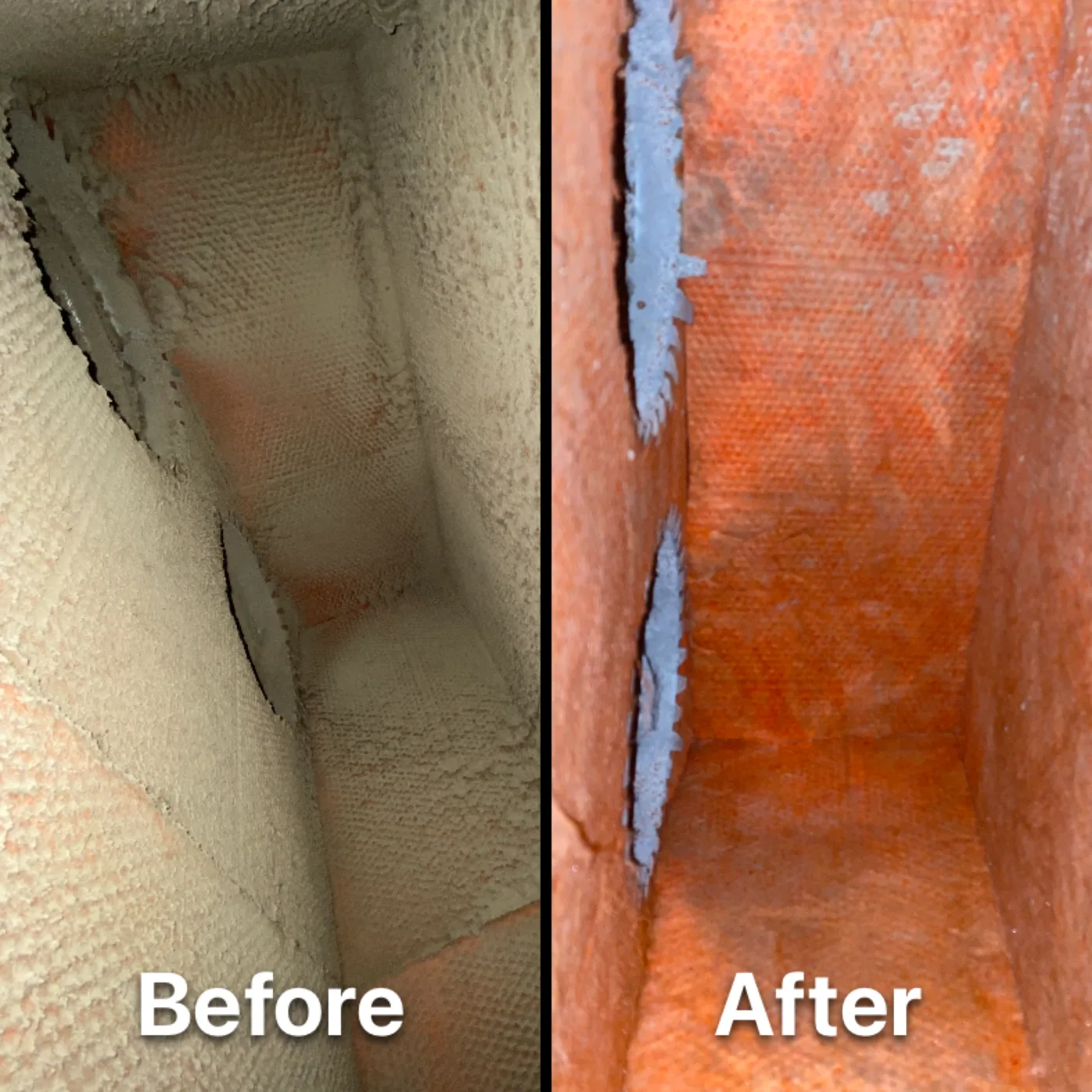
Air duct cleaning is a source-removal service for included, accessible components. A defined scope may cover supply and return ducts, boots, registers, grilles, and plenums. Professional collection equipment captures material loosened by tools selected for the duct construction and condition. The service should identify exactly which components were accessed.
Cleaning does not create ongoing filtration after the appointment. Once the work is finished, filter fit, housekeeping, equipment maintenance, moisture control, construction practices, and duct integrity continue to influence what enters or accumulates in the system. That is why a cleaning appointment and a preventive maintenance plan serve different purposes.
Routine filter care is not a cleaning schedule
Filters need regular inspection because loading varies with the filter type, system runtime, household activity, pets, renovation work, and manufacturer guidance. A heavily loaded filter may need earlier replacement. A filter that remains clean longer should still be checked for correct fit and bypass rather than treated as proof that the entire system is clean.
Duct cleaning does not follow the same routine interval. The EPA does not recommend cleaning residential ducts as an automatic annual maintenance task. Inspection may be appropriate when accessible sections show substantial deposits, particles are released from supply openings, or a known event such as unprotected construction left debris in the system.
Higher efficiency must remain compatible with the system
A filter should follow the HVAC equipment and filter manufacturer’s requirements. Installing a more restrictive filter without considering the system can reduce airflow, particularly when the filter is undersized, heavily loaded, or installed in a rack not designed for it. Reduced airflow may affect comfort and equipment operation, but the correct diagnosis requires system evaluation.
The EPA advises using the highest-efficiency filter recommended by the system manufacturer and changing it when it becomes clogged. Homeowners should not assume that the highest available rating is automatically the right choice. Filter area, cabinet design, fan performance, and the condition of the rest of the system all matter.
Dust can enter or appear for other reasons
Visible dust in a home has many possible sources, including normal indoor activity, outdoor air, renovation work, textiles, pets, and housekeeping. Return grilles commonly collect room dust because air is moving toward them. Duct leakage can also draw air and particles from attics, garages, crawlspaces, or wall cavities, depending on the building and system layout.
Cleaning removes included deposits; it does not seal leaks or correct disconnected ducts. Replacing the filter does not remove existing debris beyond the filter. When dust returns quickly, the useful next step may be to inspect filter bypass, duct connections, equipment cleanliness, building leakage, or an active source rather than repeating one service without identifying the cause.
Use the services as parts of one maintenance plan
A practical plan separates routine work from condition-based work. Inspect and replace the filter according to observed loading and manufacturer guidance. Keep supply registers and return grilles unobstructed. Arrange HVAC maintenance for coils, drain pans, blowers, refrigerant, electrical components, and operating concerns within the provider’s qualified scope.
Consider duct cleaning when inspection identifies a removable condition in accessible ducts or related components. Consider duct repair or sealing when leakage, disconnection, crushing, or insulation problems are found. These decisions work together, but no single filter or cleaning appointment guarantees specific health effects, permanent dust elimination, lower utility bills, or correction of equipment and building problems.
Need help evaluating your system?
Call or text Zarts with your property details and the condition you are seeing. We will explain the likely scope and any access information needed for a clear quote.
Sources and further reading
These primary sources support the general consumer and system information in this guide. They do not endorse Zarts or replace evaluation of a specific home.