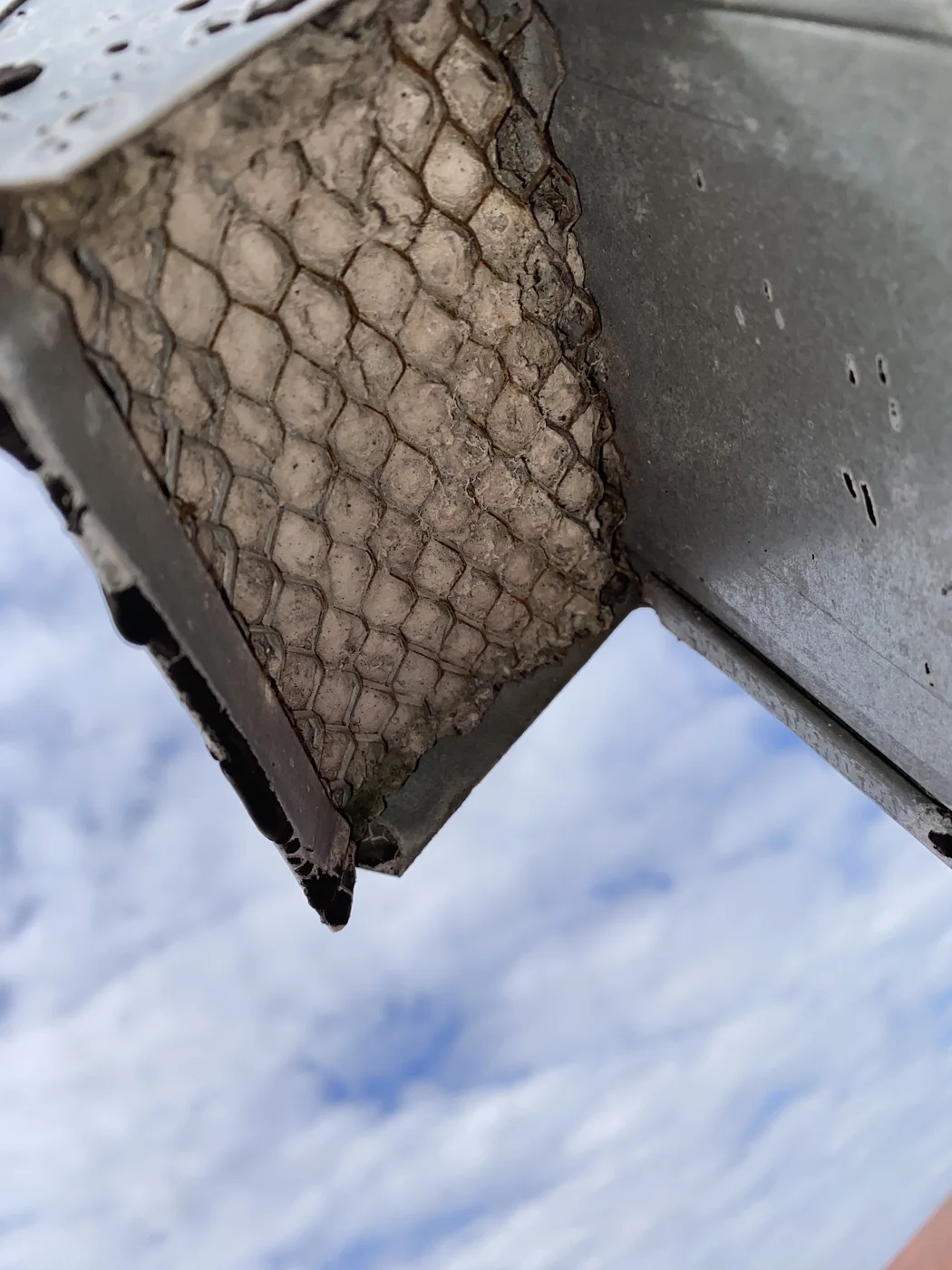
The exterior end of a dryer vent is easy to describe as a cover, but that word can refer to several different parts. A hinged flap or backdraft damper is designed to move. A hood shields the opening. A screen or fine mesh creates a fixed grid across the exhaust path. A larger cage or bird guard may surround the outlet. Those distinctions matter because dryer exhaust carries moisture and fine fibers. A component intended to keep animals or debris out can also become a collection point if its openings interfere with the lint-bearing airstream. The right response begins with identifying what is actually installed.
A damper is meant to move
Many exterior dryer terminations use one or more flaps that swing outward as the dryer moves air and settle closed when the cycle ends. This is commonly called a backdraft damper. The U.S. Fire Administration advises homeowners to make sure the outdoor vent covering opens while the dryer is operating. A damper may stop moving freely if lint gathers at the hinge, paint bonds the edges, corrosion affects the mechanism, or landscaping presses against a low wall outlet. Watching the flap from a safe location can provide useful information, but movement alone is not a complete airflow test. Some dampers open only partway by design, and dryer output varies during a cycle. The question is whether the component is free to operate as intended, not whether it reaches an arbitrary angle.
A screen creates a different airflow condition
A screen or mesh covers the opening with many small fixed passages. That design may appear useful for excluding insects or animals, but dryer exhaust is not ordinary ventilation air. Fine fibers can catch on the grid and build outward, progressively reducing the open area. A damper and a screen should not be treated as interchangeable: one moves with airflow, while the other places fixed openings across the path. The practical lesson is simple: do not assume that every protective-looking layer belongs on a dryer outlet. If mesh is present, document it and discuss the termination with a qualified professional or building representative rather than tearing it off without knowing who owns the component or why it was installed.
Bird guards and cages need precise descriptions
The phrase bird guard is used loosely. It may mean a wide, removable cage around a hood, a louvered cover with generous openings, or a fine screen placed directly across the outlet. Those configurations do not behave the same way. A wide guard may leave room for the damper to operate, while a tight cage can still collect lint where airflow strikes it. Animal nesting material can also obstruct the area around a termination. A service report should describe opening size, placement, visible lint, damper movement, and any evidence of nesting rather than simply marking bird guard present. If wildlife is active, removal and exclusion may involve property-management rules or a wildlife professional in addition to vent service.
Roof and sidewall outlets present different access questions
A dryer exhaust may end at a sidewall or on a roof, depending on the building design and the appliance manufacturer’s instructions. The location itself does not establish whether the vent is functioning properly. Sidewall outlets are often easier to observe from ground level, while roof terminations may require safe roof access and coordination with the owner, association, or roofing contractor. A roof cap can have a damper, hood, or guard that is not visible from the laundry room. For that reason, indoor cleaning should not automatically lead to a statement that the exterior component is clear when nobody inspected it. The report should say whether the termination was reached, observed remotely, or not accessible during the visit.
Exterior buildup can resemble an interior clog
A duct can be relatively clear upstream yet still show weak discharge if the last few inches are restricted by lint, a stuck flap, or an unsuitable cover. The reverse is also possible: a clean-looking outlet can sit at the end of a duct with buildup farther inside. This is why evaluation should combine exterior observation with inspection of the connector and, when appropriate, a controlled airflow comparison. Cleaning the main duct without freeing a lint-packed termination may leave the homeowner with the same symptom. Cleaning only the cover may provide temporary improvement while deeper buildup remains. The parts work as one path, and the conclusion should reflect every section that was actually assessed.
Concerned about the exterior vent cover?
Zarts can clean the accessible dryer exhaust path, check the operation of an accessible termination, and document screens, guards, lint buildup, or damaged components that may need separate attention.
Sources and further reading
These primary sources support the general consumer and system information in this guide. They do not endorse Zarts or replace evaluation of a specific home.